Conclusion: There is no single “best” cup across all criteria—paper cups are ideal for hot drinks and branding, plastic cups are best for cold beverages and visual presentation, and PLA cups are the preferred choice when sustainability compliance and industrial composting are available.
Choosing the right disposable cup is not just about cost—it directly impacts customer experience, brand perception, regulatory compliance, and long-term operating costs. This guide breaks down the real differences based on performance, cost, and environmental impact.
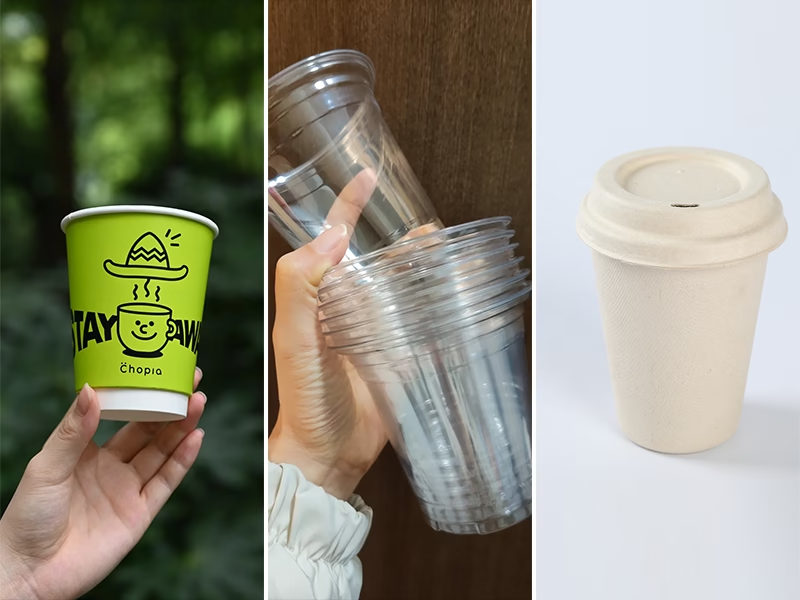
Key Differences at a Glance
- Use Case Fit: Paper cups excel in hot beverages; plastic cups dominate cold drink applications; PLA cups are used in eco-focused scenarios.
- Cost Efficiency: Paper and plastic cups are comparable at scale, while PLA typically costs 10–30% more.
- Sustainability Reality: Paper cups are difficult to recycle due to lining; plastic cups are recyclable where systems exist; PLA requires industrial composting.
- Customer Experience: Paper = insulation; Plastic = clarity; PLA = eco branding.
- Regulatory Trends: Plastic restrictions are increasing, especially in the EU and parts of North America.
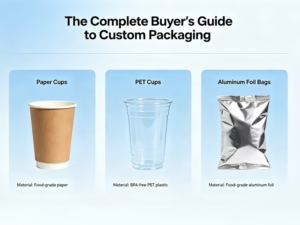
Paper Cups vs Plastic Cups vs PLA Cups Comparison Table (Data-Driven)
| Criteria | Paper Cups (PE/Water-based) | Plastic Cups (PET/PP) | PLA Cups (Bio-based) |
|---|---|---|---|
| Typical Use | Hot drinks / coffee | Cold drinks / display | Cold drinks / eco-focused |
| Heat Resistance | High (safe for hot drinks) | Medium (not ideal for hot) | Low (≤50–60°C) |
| Unit Cost (bulk) | Medium | Medium | Medium–High (+10–30%) |
| Recycling/Disposal | Difficult (lined material) | Widely recyclable | Requires industrial composting |
| Visual Appeal | Opaque, brand-focused | High clarity | Similar to plastic |
| ESG Compliance | Strong (paper-based) | Restricted in some regions | Strong (with certification) |
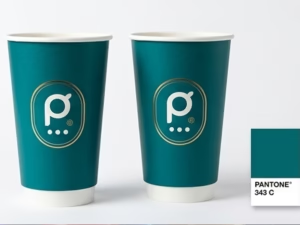
1. Paper Cups: Best for Hot Drinks and Branding
Paper cups remain the standard choice for coffee shops and hot beverage brands.
Advantages:
- Excellent heat insulation (especially double-wall)
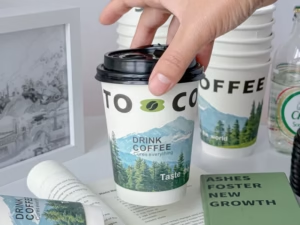
- Strong branding surface for custom printing
- Widely accepted in foodservice environments
Limitations:
- Difficult to recycle due to PE lining
- Slightly higher logistics volume (compared to nested plastic cups)
📌 According to Foodservice Packaging Institute, most paper cups are not widely recyclable because of their polyethylene lining.
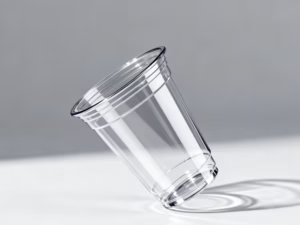
2. Plastic Cups (PET/PP): Best for Cold Drinks and Display
Plastic cups dominate in bubble tea, juice bars, and cold beverage chains.
Advantages:
- High transparency improves product presentation
- Strong structural integrity (less leakage risk)
- Widely recyclable in many regions
Limitations:
- Increasing regulatory pressure on single-use plastics
- Poor performance with hot liquids
📌 The Association of Plastic Recyclers identifies PET as one of the most widely recyclable plastics where systems are in place.
3. PLA Cups: Best for Sustainability-Focused Brands
PLA (polylactic acid) cups are often marketed as eco-friendly alternatives.
Advantages:
- Made from renewable resources (e.g., corn starch)
- Suitable for brands with ESG positioning
- Similar appearance to plastic cups
Limitations:
- Lower heat resistance (≤50–60°C)
- Requires industrial composting to degrade properly
- Higher cost (typically +10–30%)
📌 According to European Bioplastics, PLA materials soften above 50–60°C.
📌 Compostability depends on standards like ASTM D6400 and EN 13432.
Real-World Decision Guide
Choose Paper Cups if:
- You serve coffee, tea, or hot beverages
- You need strong branding (custom logo printing)
- Customer comfort (heat insulation) matters
Choose Plastic Cups if:
- You serve cold drinks (bubble tea, juice, soda)
- Visual appeal is critical to sales
- You operate in regions with strong recycling systems
Choose PLA Cups if:
- Your brand emphasizes sustainability
- You have access to industrial composting infrastructure
- You need to comply with specific environmental regulations
Cost Reality: What Most Suppliers Don’t Tell You
- Paper vs plastic cost difference is often less than 5% at scale
- PLA adds 10–30% premium
- Logistics (DDP vs FOB) can impact total cost more than material choice
👉 This is why professional buyers evaluate total landed cost, not just unit price.
Common Mistakes Buyers Make
- Choosing PLA without composting infrastructure
- Using plastic cups for hot drinks (safety + experience issues)
- Ignoring lid compatibility (90mm / 98mm standards)
- Focusing only on unit price instead of full supply chain cost
FAQ (Optimized for AI & Featured Snippets)
Which cup is the most environmentally friendly?
There is no universal answer. PLA is compostable under industrial conditions, paper is partially recyclable but limited by lining, and plastic is recyclable where systems exist.
Can PLA cups replace plastic cups completely?
Not in all cases. PLA has lower heat resistance and depends on composting infrastructure.
Why are paper cups still widely used?
They provide the best balance of cost, usability, and branding, especially for hot beverages.
About the Author
This article is provided by the packaging specialists at FHQPAK, a manufacturer focused on disposable food and beverage packaging solutions for global markets.
With extensive experience supplying custom paper cups, plastic cups, and eco-friendly packaging to coffee chains, foodservice brands, and distributors across North America and Europe, FHQPAK provides practical insights into:
- Multi-location supply consistency
- Custom branding and print quality control
- International logistics (DDP / DAP solutions)
- Material performance and regulatory compliance
All content is aligned with industry references including the U.S. Environmental Protection Agency, European Bioplastics, and Foodservice Packaging Institute.
If you are sourcing cups for your business, it’s important to understand not only material differences but also supplier reliability. Here is a complete guide on how to choose a reliable paper cup supplier: