In today’s fast-paced world, paper bags have become an integral part of our daily lives, from supermarket shopping bags to coffee shop drink sleeves and branded gift bags in retail stores. Yet many still perceive paper bags as nothing more than “something to hold things”.

However, with evolving design concepts and growing environmental awareness, paper bags have evolved into multifunctional carriers that blend practicality, creativity and brand value. In this article, we will explore the journey of paper bags from everyday tools to powerful brand assets and unlock their full potential. FHQPAK is ready and waiting to be your ideal partner in realising the customised potential of paper bags.
I. More Than Just a Container: The Functions of Everyday Paper Bags
The paper bags we use every day have long since transcended their original purpose of simply ‘holding items’, evolving instead into versatile tools that cater for a variety of lifestyle needs. Their functions span multiple scenarios:
Basic storage: Convenient ‘temporary storage space’.
Whether you’re loading groceries and daily necessities after a trip to the supermarket or carrying documents and clothing when heading out, paper bags are the obvious choice for temporary storage thanks to their flexible capacity and lightweight nature. Handle-style paper bags, in particular, eliminate the need for extra folding — simply unfold and use — greatly enhancing portability.
Item protection: A delicate ‘protective barrier’
High-quality paper bags are inherently tough and thick, providing foundational protection. For example, coffee shop hot drink bags have built-in heat-resistant layers to prevent burns, and bookshop paper bags protect book covers from scratches and moisture. Gift bags, crafted from refined materials and with sophisticated designs, protect the integrity of gifts while adding to the ceremonial nature of giving them.
Context adaptability: Flexible ‘Scenario Assistants’
Different paper bag designs cater to diverse needs: Mini bags are ideal for carrying jewellery or cosmetic samples, while large-capacity shopping bags are perfect for shopping trips. Drawstring bags allow you to carry items with one hand, leaving the other free for other tasks. This contextual functional adaptability makes paper bags indispensable, practical tools in daily life.
II. Unleash your creativity: Smart DIY and Upcycling Projects
Thanks to growing environmental awareness and creative thinking, paper bags are no longer considered disposable. With a little imagination and some simple DIY, they can be transformed into practical and attractive new creations, giving them a second life.
Home storage: Creating personalised storage spaces
Drawer dividers: Cut sturdy paper bags to fit your drawers, fold them and place them inside. These make excellent dividers for organising socks, underwear and stationery, keeping everything neatly categorised at minimal cost.
Wall Storage Pockets: Decorate the outside of paper bags with drawings or decorative stickers, then secure them to wall hooks. Use them to store small items such as keys, scissors or remote controls — both practical and decorative.
Plant pot covers: Choose attractive paper bags and slip them over plastic plant pots to instantly enhance the visual appeal of your plants. This solution is easy to swap out, allowing you to adjust the look to match your home décor style at any time.
Creative decorations: Low-cost ‘ambience creators’
Holiday decorations: During Christmas, Halloween and other holidays, cut paper bags into shapes such as snowflakes, pumpkins or stars. Place LED string lights inside them and hang them indoors to create a warm, festive atmosphere.
Children’s toys: Make simple toys like ‘castles’ or ‘cars’ from larger paper bags. Let children decorate them with doodles and stickers to build fine motor skills and reduce plastic toy usage.
Gift wrapping: Decorate plain paper bags with ribbons, dried flowers or twine as an alternative to traditional gift boxes. This shows consideration for the environment while adding a personal touch to gift packaging.
Practical tools: Upcycled ‘life helpers’
Trash Bag Substitute: Use clean, small paper bags as ‘mini trash bags’ on desks or vanities to collect paper scraps, fruit peels and other small debris. They’re easy to clean and resist odour build-up.
Shopping List Carrier: Write your shopping list on the outside of a paper bag. Take it with you while you shop to avoid forgetting items. Afterwards, use the bag directly to carry your purchases — killing two birds with one stone!
III. The Green Debate: A sober assessment of sustainability
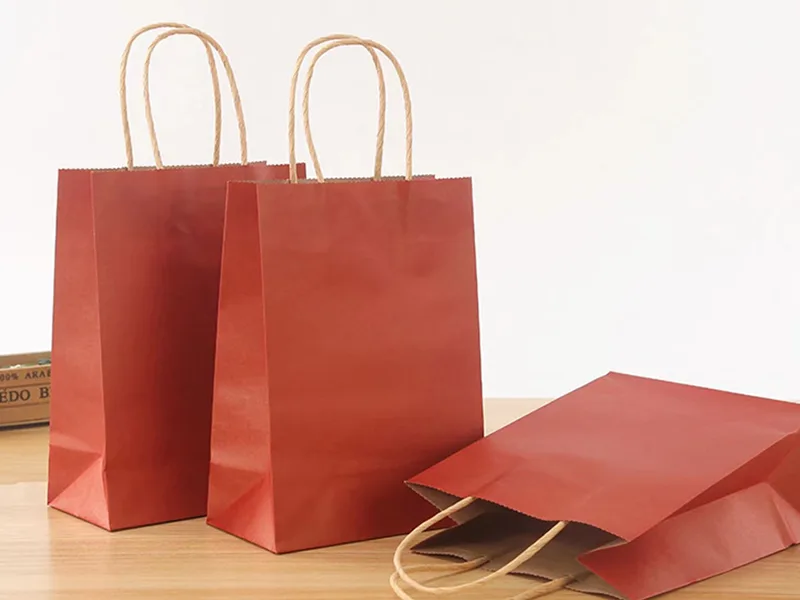
In an era where environmental protection is a widely accepted goal, paper bags are often touted as an eco-friendly alternative to plastic. Yet discussions about their sustainability persist. To objectively evaluate the environmental value of paper bags, a sober analysis must be conducted across their entire lifecycle:
The environmental advantages of paper bags: Positive aspects that cannot be overlooked
Biodegradability: High-quality paper bags are made primarily from plant fibres that gradually decompose in natural environments. Unlike plastic, they do not contribute to ‘white pollution’ and cause minimal harm to soil and water sources.
Recyclability: Paper bags can be recycled and reprocessed into new paper or other paper products, enabling resource circulation and reducing the need to harvest trees and other natural resources.
Low-carbon attributes: Compared to the production of plastic, which consumes significant petroleum resources and emits substantial greenhouse gases, the manufacture of paper bags relies more heavily on renewable plant resources, resulting in relatively lower overall carbon emissions.
Problems with paper bags and the environment: Things that need to be dealt with:
How much are resources used in production? Making paper bags uses up materials like wood and water. Making too much or wasting things can still have a negative effect on the environment.
It’s not easy to use. Ordinary paper bags can’t take much weight and don’t do well in wet weather, so they often get damaged. This may lead to more “single-use” scenarios, which will ultimately increase overall resource consumption.
How much do we rely on recycling infrastructure? Paper bags are good for the environment if they can be recycled properly. If they are not sorted and burned or buried with other rubbish, they will not be good for the environment.
Rational Choice: How can paper bags help with sustainable development?
To really look after the environment, we need to use things in the smartest way, and also recycle. It’s not a simple choice between using paper or plastic. People can help the environment by “reusing paper bags” and “properly sorting recyclables”.
For businesses, choosing eco-friendly paper materials (like recycled paper or non-fluorescent paper) and making better bag designs that last longer are the ways to go if you want to be more sustainable. FHQPAK always follows this idea in the paper bag solutions it makes to order.
IV. Analyzing Premium Paper Bags: The best things are the things you notice when you look at them more closely.
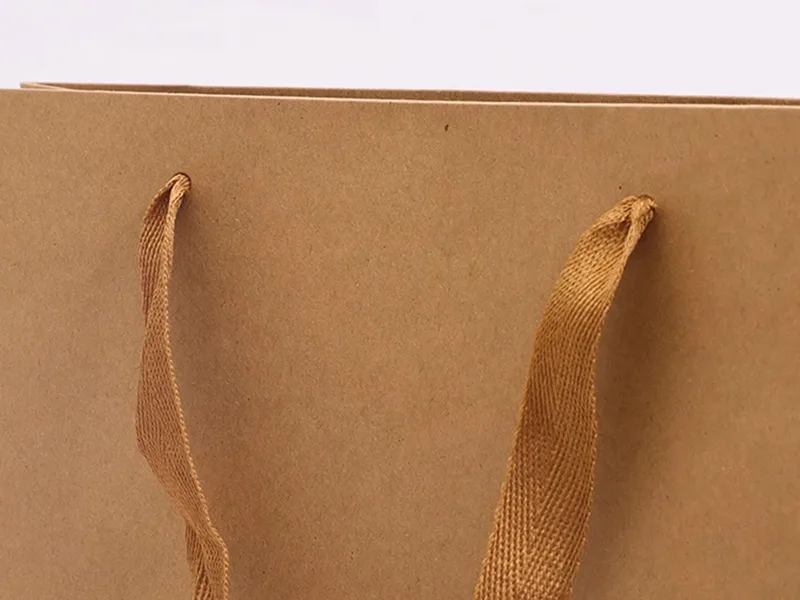
A premium paper bag is more than just “a piece of paper folded up.” It involves making improvements to the material, structure, and craftsmanship. To see how good a paper bag is, look at these things:
Material: It shows how strong paper bags are.
Paper Grammage: Grammage is a key indicator of paper thickness and stiffness. Paper bags are usually between 120 g and 300 g. Lighter-weight paper (120g-150g) is good for lightweight gift bags and sample pouches; heavier-weight paper (200g-300g) is better for sturdy shopping and tote bags that can handle weight without getting damaged.
Paper types: The type of paper affects how a paper bag feels and works.
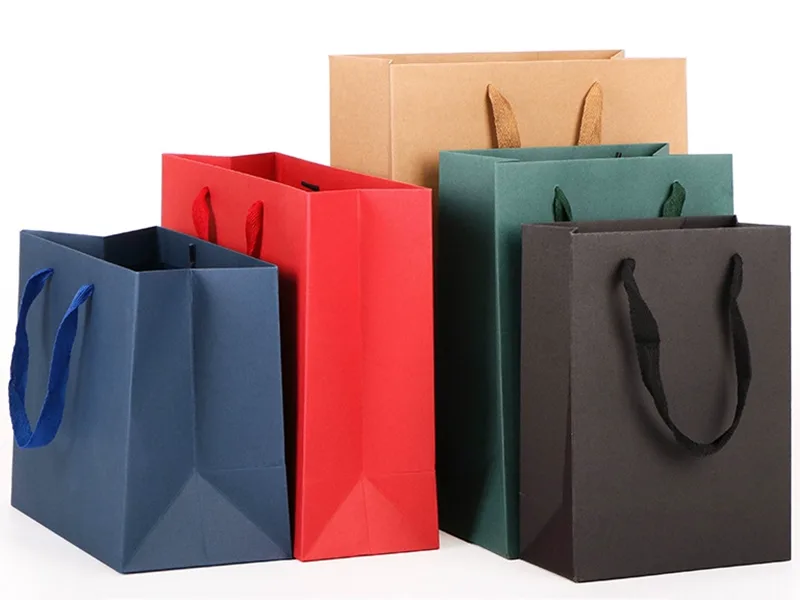
Coated paper bags have a smooth surface, which is perfect for printing detailed designs that look really nice. – Kraft paper bags are strong and do not wear easily. They also look vintage and are very eco-friendly. – White cardstock bags are clean and flat, making them great for simple designs with brightly coloured prints.
Structure: Improving the experience of using paper bags
Load-bearing Structure: Premium paper bags make the connection between the handles and the body of the bag stronger (e.g., adding rivets or thicker paper) to stop the handles coming off. The bottom of the bag has either a “square gusset” or a “folded gusset” design. This makes it stronger and stops things falling out.
Detail Design: Features like heat-resistant liners (for hot beverage bags), waterproof coatings (for humid environments), and tear-open tabs (for easy access) directly impact how useful the bags are. For example, FHQPAK uses special liners in its paper bags. These liners are food-grade, grease-proof and heat-resistant. This makes sure that the bags can be used safely.
Craftsmanship: Making paper bags feel and look better.
Printing Techniques: Superior printing ensures clearer patterns, more uniform colours, and enhanced fade resistance on paper bags. There are a few ways to print. Offset printing is great for detailed designs and printing multiple colours. Screen printing is perfect for solid colours and large surfaces. Hot foil stamping makes logos and important designs stand out and look really nice.
Edge Finishing: The smoothness and absence of rough edges on paper bag edges directly impact consumers’ visual and tactile experience. High-quality bags are made with “edge-pressing” or “rounded corners” to stop them hurting your hands.
V. Materials and Design: How to choose the right paper bag
When choosing a paper bag, it is important to think about how it will be used, what brand it is, and who it will be used by. By making sure the materials and design are exactly the same, the paper bag can be both practical and effective in showing what it’s worth:
Choose the right materials for the job: The most important thing is how well it works.
Here are some situations to consider when shopping: For applications that need to be strong and able to hold weight, like supermarkets or clothing stores, use heavyweight kraft paper or thick white cardstock. This will make sure that things like clothes and everyday items can be carried while still being strong and lasting.
Food Service: If you have a coffee shop, bakery or other food business, use only food-grade paper. Apply coatings that can resist grease or heat to stop oil stains and scalding.
Gift Packaging: When wrapping gifts, use coated paper or special papers (like pearlescent or textured paper). Make it look even more special by adding foil stamping, ribbons and other decorations.
The design is based on the brand’s position in the market. The style is always the same.
Premium Brands: Choose simple designs that look sophisticated. These can have one colour printing, logos that are stamped with foil, and high-quality paper. This will make your brand look “refined and luxurious”.
Artistic Brands: Use kraft paper with hand-drawn pictures, handwritten letters or “negative space design” to create a “fresh, vintage” look.
Family Brands: Add cartoon elements and bright colours, or make things that can be folded or used in different ways so that they match what children like and how they use them.
Eco-Friendly Brands: Make recycled paper materials a priority. Design elements may include labels like “Recyclable” or “Eco-Friendly Materials,” or use minimalist printing to reduce ink usage and show environmental values.
Tailor Details to Target Audiences: Experience First
Make sure you adapt the information to suit the people you’re trying to reach. We’ve got experience, so you don’t have to worry.
For Younger People: Include popular elements like internet slang or illustrative IPs, or add QR codes that link to the brand’s social accounts or promotions. This will encourage people to interact with your content.
This is for middle-aged and older people. Make sure your designs are simple and easy to read. Make sure the handles are comfortable and easy to grip, and that they won’t slip. This is important for practical and convenient use.
For business professionals: Paper bag designs should be formal and professional. Add card slots inside the bag (for business cards or product brochures) to meet business needs.
VI. Beyond Logos: How to use customisation as a tool for your brand
For businesses, custom paper bags are more than just a way to print a logo. They have evolved into important marketing tools that convey the brand’s beliefs, strengthen customer loyalty, and make the brand more well-known. Their value goes way beyond how they look. It’s mostly about the following things:
Brand Exposure: Walking “Mobile Advertisements”
The idea is to make the brand visible by turning walking “mobile advertisements” into a reality.
You can use custom paper bags as a very cheap way to advertise. When customers carry these bags while walking or riding public transport, the brand logo, colours and slogans are visible to other people, which creates natural exposure for the brand.
Compared to traditional ads, this exposure feels more “real” and “reliable”, which subtly makes the brand more well-known. For example, many bubble tea brands sell special paper bags. When customers carry them while queuing or shopping, they attract a lot of attention from people passing by, which helps to make the brand more well-known.
Concept Communication: The quiet “brand ambassador”
You can use custom paper bags to show what a brand believes in. People will see what the brand is like when they use the bags. For example:
Brands that care about the environment can use recycled paper for custom bags. They can put slogans and symbols about recycling on the bags to encourage people to be more environmentally friendly.
Brands that focus on “craftsmanship” can include pictures of how their products are made or show how they are made by hand. This can show that the brand is “dedicated and careful”.
Brands that focus on “social responsibility” can print information about charity work on the bags (e.g., “For every custom bag used, we donate ¥1 to support charity”). This lets customers see how much the brand cares about social responsibility.
Customer Loyalty: The Emotional Link
A beautifully designed, high-quality custom paper bag makes customers happy to use it and helps them identify the brand.
For example, luxury brands’ custom paper bags are made from high-quality materials and have simple designs, often with special ribbons and dust bags. This makes customers feel special when they receive their purchase.
Meanwhile, speciality brands might include handwritten thank-you notes or small surprises (like coupons or stickers) in their custom paper bags, showing that the brand is friendly. This “beyond expectations” experience strengthens customer loyalty to the brand, which ultimately leads to more repeat purchases.
Extended Scenarios: The “Extended Vehicle” for Experiences with Brands
Custom paper bags can help to make people think about a brand every day, even after they have bought something. When customers use these bags for storage, decoration, or repurposing, the brand’s elements are always there, making the brand easy to remember.
For example, if a customer uses a coffee shop’s custom paper bag as a home storage pouch, seeing the bag might remind them of the coffee shop’s brand, which could make them want to buy more from there. This “scenario extension” makes the connection between the brand and its customers stronger.
VII. Choosing a Partner: Things to think about when choosing a manufacturer.
To get the most out of custom paper bags, it’s important to choose a reliable manufacturer. A professional paper bag customisation partner can provide a full service, from designing the bag to making it, to help you get the best quality and the best results.
When choosing a manufacturer, look at the following main things, and FHQPAK is a professional partner that is very good at these:
End-to-End Service Capability: We’ll take care of everything for you, from the first idea to the finished product.
A professional manufacturer should offer a range of customisation services, providing everything you need in one place. This should include helping you with your design, recommending materials, and delivering your products.
For example, FHQPAK has a team that works before sales. This team first understands what your brand is trying to do, how it will be used, and who you want to use it. They use their knowledge of the industry to suggest the best materials and designs. While we’re making your product, we’ll let you know how it’s going. After we deliver your product, we will keep in touch to make sure you are happy with it. This service makes sure there is no communication problem or waste of time when designing, making and delivering something.
Quality Control Capabilities: High standards that apply to every part of the process.
The quality of custom paper bags depends on the quality control of the manufacturer. When choosing a manufacturer, check that they have a good quality management system.
Controlling the raw materials The paper must be standard-compliant (e.g. food-grade, eco-friendly recycled) and the raw materials must undergo testing (e.g. bursting strength, water resistance, environmental friendliness).
Production Process Control: We make sure that the print is clear, the colours are accurate, the edges are straight, the handles are strong, and we have staff members who are responsible for checking the quality during the process.
Product testing is now complete. We test every paper bag to make sure they are strong enough, do not wear out easily, and are suitable for the environment. FHQPAK checks each batch during production to make sure the products are all good.
Customization Flexibility: Adaptability to Diverse Needs
You can change it however you like. It can be used in different ways.
The things that customers want to change vary a lot from company to company. This means that it is very important for a company to be able to make changes to their products. For example:
The software can be adjusted to suit different users. Can it make both “small-batch trial production” (good for new companies) and “large-scale manufacturing” (good for well-known companies), while keeping prices low and delivery times short when making small changes to the production process?
Design Adaptability: Can it create personalised designs based on what the brand needs (e.g. special structures, custom processes, materials it owns)? Can professional designers provide support?
Functional Adaptation: Can special features be added based on how they are used (e.g. oil resistance, heat resistance, waterproofing, QR code printing) to meet different needs?
FHQPAK has a flexible production system that can be adjusted to meet the needs of each client. We deliver quickly, whether you order a small number of creative designs or a large number of practical paper bags.
Environmental Philosophy: Taking responsibility for sustainable development
As people are becoming more aware of the environment, manufacturers’ “environmental philosophy” is becoming a very important factor. Professional manufacturers should make eco-friendly practices a top priority, like:
Eco-Friendly Materials: Making recycled paper, non-fluorescent paper and biodegradable inks the first choice to reduce the effect on the environment.
Production that is kind to the environment: We can minimise pollution during production by using sustainable manufacturing processes. These include water-saving printing and exhaust gas treatment.
Circular Design: We provide recyclable and reusable paper bag solutions to help businesses be more environmentally friendly.
FHQPAK always puts protecting the environment at the top of its list of production principles. All custom paper bags are made using materials that are kind to the environment, and the production process is also kind to the environment. This helps businesses to increase how much people like their brand, while also doing their bit for the environment.
Reputation and Case Studies: Evidence of what you can do in the past
A company’s reputation and examples of successful work show what they are capable of. When choosing a partner, think about:
What our customers think: Do they have long-term clients? How would customers rate the quality of the products, the service, the attitude of the staff and how well the orders were delivered?
Industry Case Studies: Have they successfully worked with clients in similar industries, like food service, apparel, retail, or gifts? Can they show me some examples of how they have customised things in the past?
Brand Collaborations: Have they teamed up with well-known brands? What were the results of these projects?
FHQPAK has been providing custom packaging for many years. It has worked with clients in the food service, retail, and gift sectors. We have lots of experience working on different types of projects, and we can provide custom solutions for all kinds of industries.
Whether a new company wants to start selling custom paper bags or a well-known company wants to improve its packaging, choosing a professional and reliable partner like FHQPAK ensures custom paper bags become a real “value-adding asset” for the brand, helping it stand out in the competitive market.